
Eye
August 14, 2026
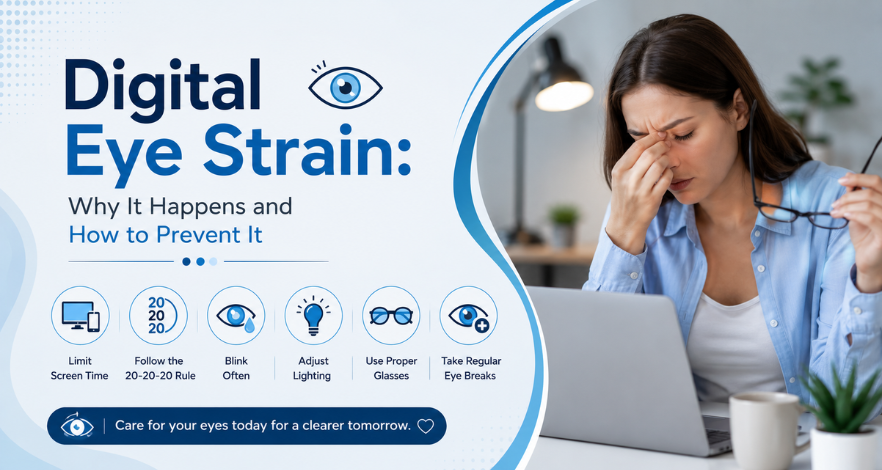
Digital Eye Strain: Why It Happens and How to Prevent It
As digital devices have become central to work, education, and daily communication, a growing number of people are experiencing symptoms of digital eye strain, sometimes referred to as computer vision syndrome. Understanding why this happens, and what can be done to prevent it, is increasingly important for maintaining long-term eye comfort and health.
What Is Digital Eye Strain? Digital eye strain refers to a group of eye and vision-related symptoms that result from prolonged use of digital screens, including computers, smartphones, and tablets. Unlike general eye fatigue, digital eye strain is specifically linked to the unique visual demands that screens place on our eyes, including sustained close-range focus, screen glare, and reduced blinking frequency.
Common Symptoms to Recognize Individuals experiencing digital eye strain often report a combination of symptoms, including dry or irritated eyes, blurred or fluctuating vision, headaches, particularly around the temples or forehead, and neck or shoulder discomfort related to poor viewing posture. These symptoms typically worsen throughout the day, especially during extended periods of continuous screen use without breaks.
Why Screens Affect the Eyes Differently Several factors contribute to why digital screens are particularly taxing on the eyes compared to other visual tasks. Studies have shown that people blink significantly less frequently while looking at screens, which reduces the natural lubrication of the eye's surface and contributes to dryness. Additionally, screens often involve viewing text or images with less contrast than printed material, requiring greater visual effort to focus clearly. Glare from screens, particularly in poorly lit environments, further adds to visual strain.
The Role of Screen Positioning and Posture Improper screen positioning is a frequently overlooked contributor to digital eye strain. Screens positioned too close, too far, or at an improper height relative to eye level can force the eyes and neck to work harder than necessary. Ideally, screens should be positioned about an arm's length away, with the top of the screen roughly at or slightly below eye level, to promote a more natural, relaxed viewing angle.
Practical Strategies for Reducing Eye Strain There are several practical steps individuals can take to reduce digital eye strain in daily life. Following the 20-20-20 rule, taking a twenty-second break to look at something twenty feet away every twenty minutes, helps reduce the sustained focus that contributes to fatigue. Adjusting screen brightness and contrast to comfortable levels, reducing glare through proper lighting or anti-glare screen filters, and consciously blinking more frequently can all contribute to reduced strain over time.
Understanding Blue Light and Its Role Blue light emitted from digital screens has received considerable attention in recent years, with some suggesting it contributes significantly to eye strain and disrupted sleep patterns. While research on the direct impact of blue light on eye strain specifically is still evolving, many patients report subjective comfort improvements when using blue-light-filtering glasses or screen settings, particularly during evening screen use closer to bedtime.
When to Seek Professional Evaluation While many cases of digital eye strain can be managed through lifestyle adjustments, persistent or worsening symptoms may indicate an underlying vision problem, such as uncorrected refractive error or binocular vision issues, that requires professional evaluation. If symptoms continue despite implementing preventive strategies, scheduling a comprehensive eye examination can help identify any underlying issues contributing to your discomfort.
Long-Term Habits for Healthier Screen Use Beyond immediate relief strategies, developing sustainable long-term habits is key to managing digital eye strain, particularly for individuals whose work or studies require extensive screen time. This includes maintaining proper posture, ensuring adequate ambient lighting, staying well-hydrated to support tear production, and scheduling regular eye examinations to monitor overall eye health over time.
Balancing Productivity and Eye Comfort For many people, reducing screen time significantly isn't a realistic option given work and lifestyle demands. The good news is that digital eye strain can often be effectively managed through simple adjustments rather than requiring a complete lifestyle change. By incorporating small, consistent habits into daily routines, individuals can continue to use digital devices productively while minimizing associated eye discomfort.
Taking the Next Step If you experience persistent digital eye strain symptoms that don't improve with lifestyle adjustments, our specialists at VisionCare Eye & Dental Clinic can conduct a comprehensive evaluation to determine whether an underlying vision issue may be contributing to your discomfort, and recommend an appropriate, personalized treatment plan.