
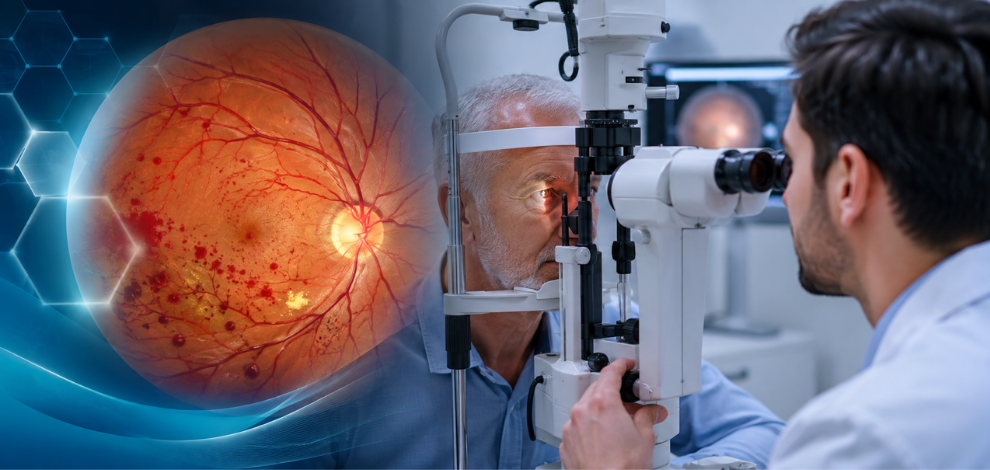
Hypertensive Retinopathy Diagnosis & Treatment
High blood pressure does not only affect the heart and kidneys — over time, it can also impact the delicate blood vessels within the retina, a condition known as hypertensive retinopathy. At our clinic, Dr. Mahendra Singh provides thorough diagnosis and ongoing monitoring of hypertensive retinopathy, helping patients understand and manage the effects of high blood pressure on their eye health.
Understanding Hypertensive Retinopathy Hypertensive retinopathy develops when persistently elevated blood pressure causes changes to the small blood vessels supplying the retina. Over time, this can lead to vessel narrowing, leakage, hemorrhages, or swelling within the retina, changes that can potentially affect vision if the underlying blood pressure remains poorly controlled for an extended period.
Why the Eyes Reflect Overall Vascular Health The retina is one of the few places in the body where blood vessels can be directly observed during a clinical examination, making retinal assessment a valuable window into a patient's broader vascular health. Changes observed during a dilated eye examination can sometimes provide early indication of how blood pressure may be affecting blood vessels elsewhere in the body, making this an important, non-invasive diagnostic tool.
How Hypertensive Retinopathy Is Diagnosed Diagnosis involves a detailed retinal examination, typically performed following pupil dilation as part of our structured OPD protocol, allowing Dr. Singh a clear, thorough view of retinal blood vessels. During this examination, specific patterns such as vessel narrowing, crossing changes where vessels intersect, hemorrhages, or swelling around the optic nerve are carefully assessed to determine the presence and severity of hypertensive changes.
Who Should Be Screened Patients with a history of high blood pressure, particularly those with long-standing or poorly controlled hypertension, are encouraged to undergo regular comprehensive eye examinations, even in the absence of noticeable vision symptoms. Since hypertensive retinopathy often develops gradually and silently, proactive screening is the most effective way to detect changes before they progress further.
Treatment and Management Approach Unlike some eye conditions that are treated directly within the eye itself, hypertensive retinopathy management primarily focuses on addressing the underlying cause — blood pressure control. Dr. Singh works to identify and document retinal changes, providing important clinical information that can be shared with the patient's treating physician to support better-coordinated blood pressure management. In more advanced cases involving significant retinal changes, closer ophthalmic monitoring may be recommended to track progression over time.
The Importance of Coordinated Care Effective management of hypertensive retinopathy relies heavily on coordination between eye care and overall blood pressure management. Patients are encouraged to maintain open communication between their eye specialist and their treating physician, ensuring that both aspects of their health are being addressed together rather than in isolation.
Monitoring Retinal Changes Over Time For patients diagnosed with hypertensive retinopathy, regular follow-up eye examinations allow Dr. Singh to monitor whether retinal changes are stable, improving, or progressing, providing valuable feedback on how well blood pressure is being managed over time. This ongoing monitoring is particularly important for patients with more significant retinal findings at initial diagnosis.
Why Early Detection Matters Because hypertensive retinopathy often develops without noticeable symptoms until more advanced stages, regular comprehensive eye examinations play a crucial role in early detection. Identifying retinal changes early allows for timely blood pressure management, potentially preventing further progression and protecting long-term vision and overall vascular health.
Our Approach at the Clinic Our structured OPD protocol ensures thorough retinal examination as part of every eye consultation, particularly for patients with known hypertension. Dr. Singh's detailed clinical assessment provides valuable insight into how blood pressure may be affecting eye health, supporting a more complete picture of each patient's overall wellbeing.
Taking the Next Step If you have high blood pressure, particularly if it has been difficult to control, scheduling a comprehensive dilated eye examination can help assess whether hypertensive changes are present in your retina, supporting timely, coordinated care with your physician.