
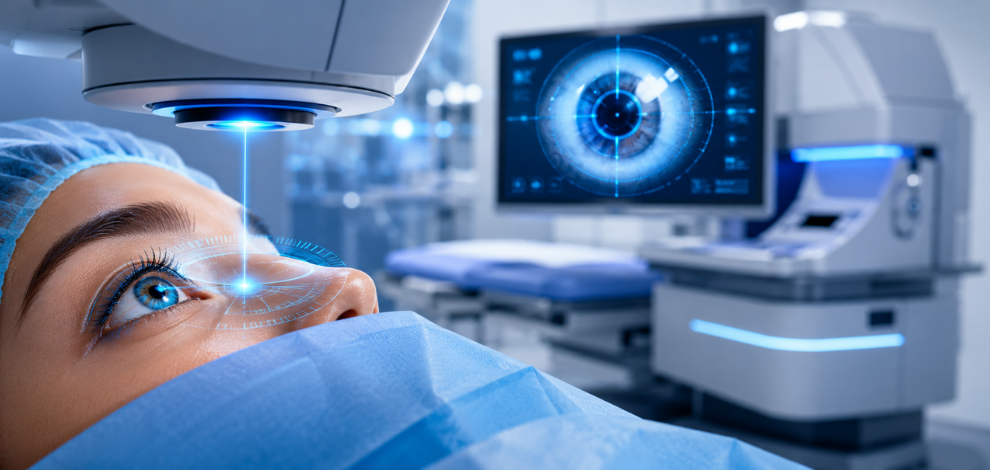
LASIK Surgery (Spectacles Removal Operation)
For many patients, the daily reliance on glasses or contact lenses can feel like a persistent inconvenience. LASIK surgery offers a well-established, scientifically supported solution, and at our clinic, Dr. Mahendra Singh provides this treatment using precise, computer-guided technology combined with thorough pre-surgical evaluation to ensure safe, appropriate candidacy screening.
How LASIK Works LASIK uses a computer-guided excimer laser to reshape the cornea, the clear front surface of the eye, correcting how light is focused onto the retina. By precisely adjusting corneal curvature, LASIK can correct nearsightedness, farsightedness, and astigmatism. The procedure begins with the creation of a thin, protective corneal flap, gently lifted to allow the laser to reshape the underlying tissue, before being carefully repositioned to support natural healing.
Who Is a Suitable Candidate Not every patient is automatically suited for LASIK, which is why our evaluation process always begins with a comprehensive assessment. Suitable candidates are generally adults with stable vision over the preceding year and corneas of adequate thickness and health. Conditions such as thin corneas, significant dry eye, or certain other eye conditions may make LASIK unsuitable, in which case Dr. Singh discusses alternative treatment options based on individual findings.
The Pre-Surgical Evaluation Process Before recommending LASIK, a thorough pre-surgical work-up is conducted, including computerized eye testing using our Shin Nippon auto-refractometer to assess refractive error, along with detailed corneal assessment to evaluate thickness and surface health. This careful screening process is one of the most important safeguards in ensuring the procedure is genuinely appropriate for each individual patient.
The Procedure Experience On the day of the procedure, numbing eye drops are applied to ensure comfort throughout treatment. The surgery itself is typically quick, with most patients reporting only mild pressure rather than pain. Because LASIK is performed on an outpatient basis, patients return home the same day, though arranging transportation is advisable, as vision may be temporarily blurry immediately following the procedure.
Recovery and Visual Outcomes Many patients notice significantly improved vision within the first twenty-four hours following LASIK, with full visual stabilization typically occurring over the following weeks. Mild symptoms such as dryness, light sensitivity, or a gritty sensation are common during the initial recovery period and generally resolve with prescribed lubricating drops and adequate rest.
Our Structured Follow-Up Protocol Following LASIK surgery, scheduled follow-up visits allow Dr. Singh to monitor corneal healing, visual acuity, and overall eye health, adjusting aftercare guidance as needed based on each patient's individual recovery progress.
Understanding the Benefits Choosing LASIK can significantly reduce or eliminate dependence on glasses and contact lenses for many patients, offering greater convenience for daily activities, sports, and lifestyle. Our clinic prioritizes transparent communication about both the benefits and realistic expectations of the procedure, ensuring patients make informed decisions.
Risks and Considerations As with any surgical procedure, LASIK carries some risks, including temporary dry eyes, glare, or halos around lights at night, particularly in the initial recovery period. Our detailed pre-operative assessment is specifically designed to minimize these risks by identifying factors that could affect outcomes before the procedure is performed.
Why Choose Our Clinic for LASIK Dr. Singh's surgical background in ophthalmology, combined with a thorough, honest pre-screening process, ensures that LASIK is recommended only when genuinely appropriate, prioritizing long-term eye health and realistic outcomes over quick promises.
Is LASIK Right for You? The best way to determine whether LASIK is suitable for your specific vision needs is through a comprehensive consultation, where Dr. Singh can assess your corneal health, refractive error, and overall eye condition, discussing the procedure and any alternative options honestly and thoroughly.