
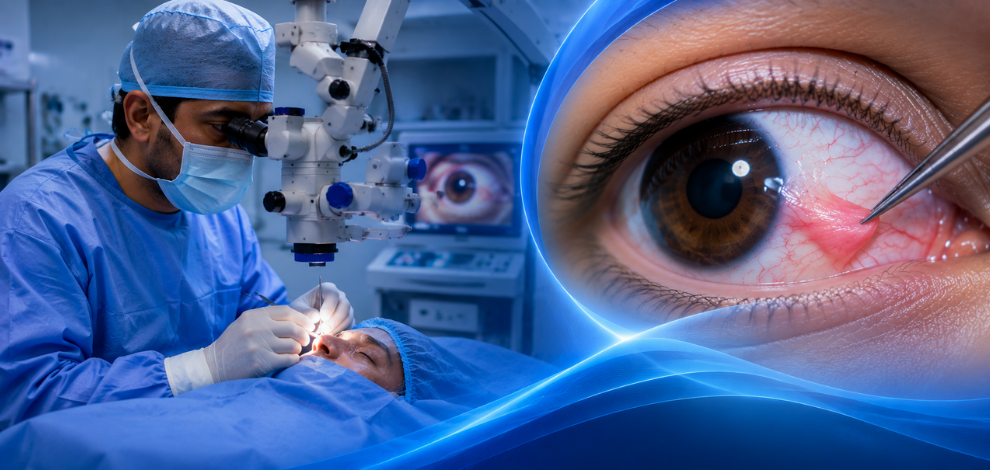
Pterygium Surgery
Pterygium is a common, non-cancerous growth of fibrous tissue that develops on the conjunctiva, the clear membrane covering the white part of the eye, often extending toward or onto the cornea. At our clinic, Dr. Mahendra Singh provides thorough evaluation and surgical treatment for pterygium, helping patients address both the cosmetic and functional concerns associated with this condition.
Understanding Pterygium Pterygium typically appears as a raised, wedge-shaped growth, most commonly forming near the inner corner of the eye and often associated with prolonged exposure to sunlight, wind, and dust. Over time, this growth can gradually enlarge, and in more advanced cases, may extend onto the surface of the cornea, potentially distorting its shape and affecting vision if it progresses significantly.
Common Symptoms Many patients with pterygium experience persistent redness, mild irritation, or a sensation of having something in the eye, particularly in dry or windy conditions. As the growth progresses, some patients also notice changes in their vision, particularly if the pterygium extends far enough onto the cornea to distort its curvature, affecting how light is focused within the eye.
Risk Factors and Prevention Pterygium is strongly associated with prolonged ultraviolet light exposure, making outdoor workers and individuals living in sunny, dusty, or windy climates particularly susceptible. Wearing sunglasses with proper UV protection and using protective eyewear in dusty or windy environments can help reduce the risk of developing pterygium or slow its progression in patients who already show early signs of the condition.
When Monitoring Is Appropriate For smaller, stable pterygium cases that are not significantly affecting vision or causing persistent discomfort, careful monitoring combined with protective measures, such as lubricating eye drops for irritation and consistent use of UV-protective sunglasses, may be an appropriate initial approach, with regular follow-up to track any changes in size or symptoms.
When Surgery Is Recommended Surgical removal is generally recommended when the pterygium is enlarging, causing persistent irritation or discomfort that affects daily comfort, or extending close enough to the central cornea to threaten vision. Surgery is also considered for significant cosmetic concerns, particularly when the growth is noticeably affecting the appearance of the eye.
The Surgical Procedure Pterygium surgery involves carefully removing the abnormal tissue from the surface of the eye, with technique selection aimed at minimizing the risk of recurrence, a known challenge with this condition. Various surgical approaches exist, and Dr. Singh selects the most appropriate technique based on the specific characteristics of each patient's pterygium, discussed in detail during pre-surgical consultation.
Recovery After Pterygium Surgery Following surgery, mild redness, irritation, or watering is common during the initial recovery period, typically improving over one to two weeks. Prescribed eye drops help support healing and reduce inflammation, and follow-up visits allow Dr. Singh to monitor the healing surface and check for any early signs of recurrence.
Addressing Recurrence Risk One important consideration with pterygium surgery is the possibility of recurrence, where the growth returns following removal. Dr. Singh's surgical technique and post-operative care approach are designed to help minimize this risk, and patients are advised to continue protective measures, such as UV-protective sunglasses, following surgery to support long-term results.
Cosmetic and Functional Benefits of Surgery Beyond addressing any vision-related concerns, pterygium surgery can also significantly improve the cosmetic appearance of the eye, removing the visible growth and restoring a smoother, clearer ocular surface, which many patients find meaningfully improves both comfort and confidence.
Why Choose Our Clinic for Pterygium Treatment Dr. Singh's thorough evaluation process ensures that surgical recommendations are based on a careful assessment of each patient's specific pterygium characteristics, balancing the benefits of surgical removal against individual patient circumstances and preferences.
Taking the Next Step If you have noticed a growth on the surface of your eye, particularly if it is enlarging, causing discomfort, or affecting your vision, scheduling a consultation with Dr. Mahendra Singh can help determine whether pterygium surgery is the right option for you.