
Glaucoma Diagnosis & Treatment
Glaucoma is often referred to as the "silent thief of sight" because it typically progresses without noticeable symptoms until significant, often irreversible, vision loss has already occurred. At our clinic, Dr. Mahendra Singh places strong emphasis on early detection and consistent long-term management of glaucoma, helping patients protect their vision through timely diagnosis and appropriate treatment.
Understanding Glaucoma Glaucoma refers to a group of eye conditions that damage the optic nerve, most commonly associated with elevated pressure inside the eye, known as intraocular pressure. Over time, this increased pressure can gradually damage the optic nerve fibers responsible for transmitting visual information to the brain, leading to progressive, permanent vision loss if left untreated. Because peripheral vision is often affected first, many patients do not notice symptoms until central vision becomes affected, by which point substantial damage may have already occurred.
Who Is at Higher Risk Certain factors increase the likelihood of developing glaucoma, including being over the age of forty, having a family history of the condition, and having underlying health conditions such as diabetes or hypertension, both of which we also diagnose and manage at our clinic. Patients with these risk factors are strongly encouraged to undergo regular comprehensive eye examinations, even in the absence of noticeable symptoms.
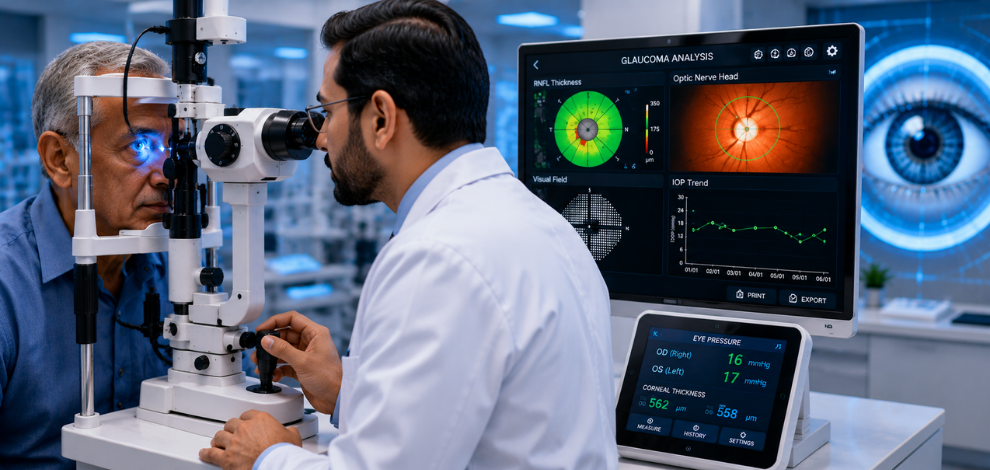
How Glaucoma Is Diagnosed Diagnosing glaucoma involves a combination of clinical assessments, including measurement of intraocular eye pressure, examination of the optic nerve for signs of damage, and evaluation of visual field to detect any peripheral vision loss. Dr. Singh conducts a thorough eye examination as part of our structured OPD protocol, often following pupil dilation, to closely assess the health of the optic nerve and surrounding structures.
Treatment Approaches for Glaucoma While glaucoma cannot be cured, and any vision already lost cannot typically be restored, effective treatment can successfully slow or halt further progression, preserving remaining vision for many years. Treatment often begins with prescription eye drops designed to reduce intraocular pressure by either decreasing fluid production within the eye or improving fluid drainage. Consistency in using prescribed drops exactly as directed is essential for effective long-term management.
Ongoing Monitoring and Follow-Up Because glaucoma is a chronic, progressive condition, regular follow-up visits are a critical part of treatment. Dr. Singh monitors eye pressure, optic nerve appearance, and visual field over time, adjusting treatment as needed based on how the condition responds. This ongoing relationship between patient and doctor allows for timely adjustments that help protect vision over the long term.
The Importance of Early Detection Because glaucoma often develops without early symptoms, routine comprehensive eye examinations are the most effective way to catch the condition before significant damage occurs. Patients are encouraged not to wait for noticeable vision changes before seeking evaluation, as by that stage considerable optic nerve damage may have already taken place.
Living with Glaucoma A glaucoma diagnosis does not have to mean significant lifestyle disruption. With consistent treatment adherence and regular monitoring, many patients successfully manage the condition for years while maintaining good functional vision. Dr. Singh works closely with each patient to build a manageable, sustainable treatment routine suited to their individual circumstances and needs.
Why Choose Our Clinic for Glaucoma Care Our clinic combines thorough diagnostic examination with ongoing, attentive follow-up care, ensuring that glaucoma patients receive consistent monitoring rather than a one-time diagnosis without continued support. Dr. Singh's surgical and medical ophthalmology background allows for comprehensive management, addressing glaucoma alongside any other coexisting eye conditions a patient may have.
Taking the Next Step If you have risk factors for glaucoma, such as age, family history, diabetes, or hypertension, or if you have not had a comprehensive eye examination in the past year, scheduling a consultation with Dr. Singh is an important proactive step in protecting your long-term vision.