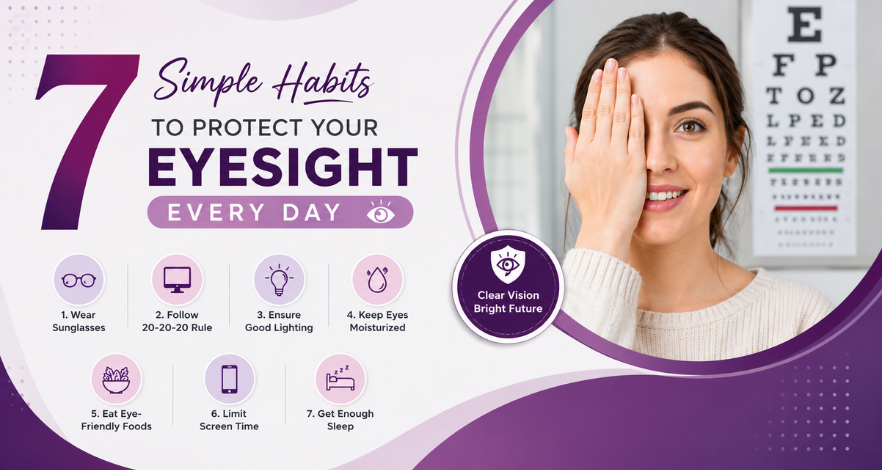
Good eyesight is often taken for granted until problems arise, but small daily habits can go a long way in protecting your vision over time. In this article, we explore seven practical, easy-to-follow habits that support long-term eye health, from proper screen usage to protective eyewear and balanced nutrition. Many people spend hours each day staring at digital screens without realizing the strain this places on their eyes, often leading to symptoms like dryness, fatigue, and headaches. Simple adjustments, such as following the 20-20-20 rule, adjusting screen brightness, and ensuring proper lighting while reading or working, can significantly reduce eye strain. Nutrition also plays an important role in eye health, with certain vitamins and antioxidants supporting the retina and reducing the risk of age-related vision problems. We also discuss the importance of wearing sunglasses with proper UV protection when outdoors, as prolonged sun exposure can contribute to long-term eye damage. Routine eye examinations remain one of the most effective ways to catch potential issues early, even before noticeable symptoms appear, making annual checkups an essential part of preventive eye care. Whether you spend long hours at a computer, work outdoors, or simply want to protect your vision as you age, these seven habits offer practical, science-backed guidance that fits easily into daily life. Read on to learn how small changes today can support healthier eyes for years to come.
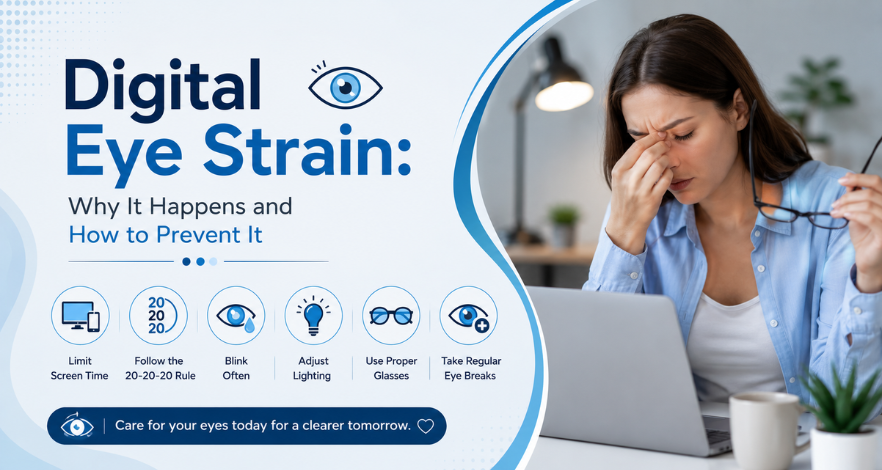
With screen time increasing across work, study, and daily life, digital eye strain has become an increasingly common complaint among people of all ages. This article explains what digital eye strain actually is, why prolonged screen exposure affects the eyes differently than other visual tasks, and what symptoms to watch for, including dryness, blurred vision, headaches, and neck or shoulder discomfort. We explore the underlying reasons digital screens contribute to eye fatigue, such as reduced blinking frequency, screen glare, and poor viewing posture, helping readers understand the root causes rather than just the symptoms. The article provides practical, easy-to-implement strategies for reducing digital eye strain, including proper screen positioning, adjusting brightness and contrast settings, and incorporating regular breaks throughout the day. We also discuss the role of blue light exposure and address common questions about blue-light-filtering glasses and screen protectors. Additionally, the article covers when digital eye strain symptoms may indicate an underlying vision problem requiring professional evaluation, rather than simply lifestyle adjustments. For students, remote workers, and anyone who relies heavily on digital devices, this guide offers actionable steps to protect long-term eye comfort and health. Readers will come away with a clear understanding of both immediate relief strategies and long-term habits that support healthier screen use without sacrificing productivity or daily digital engagement.