
Ptosis Work-Up & Ptosis Surgery
Ptosis, or drooping of the upper eyelid, can affect patients of any age, ranging from a subtle cosmetic concern to a more significant condition that partially blocks the visual field. At our clinic, Dr. Mahendra Singh provides thorough ptosis evaluation and surgical correction, helping patients address both the functional and cosmetic aspects of this condition.
Understanding Ptosis and Its Causes Ptosis occurs when the muscle responsible for lifting the upper eyelid, known as the levator muscle, becomes weakened or stretched, resulting in a drooping appearance. This can occur due to natural aging, as muscles and tendons gradually lose strength and elasticity over time, or it may be present from birth as a congenital condition affecting eyelid muscle development. In some cases, ptosis develops following previous eye surgery, injury, or certain underlying neurological or muscular conditions.
The Ptosis Work-Up Process A thorough ptosis evaluation begins with careful measurement of the degree of eyelid drooping, comparing the position of the upper eyelid margin relative to the pupil. Dr. Singh also assesses the strength and function of the levator muscle, evaluates whether the drooping eyelid is affecting the patient's visual field, particularly the upper portion of vision, and considers the underlying cause of the condition. This comprehensive assessment helps determine the most appropriate surgical approach for each individual case.
When Ptosis Affects Vision In more significant cases, a drooping eyelid can partially or substantially obstruct the upper visual field, forcing patients to unconsciously tilt their head back or raise their eyebrows to see clearly, which can lead to additional strain and discomfort over time. In children, significant ptosis can also interfere with normal visual development if left untreated, making early evaluation particularly important in pediatric cases.
What Ptosis Surgery Involves Ptosis surgery aims to tighten or reposition the levator muscle, or in certain cases, utilize alternative surgical techniques depending on the specific cause and severity of the drooping. The specific surgical approach is tailored based on findings from the pre-surgical work-up, ensuring the technique used is appropriate for the underlying cause of ptosis identified in each patient.
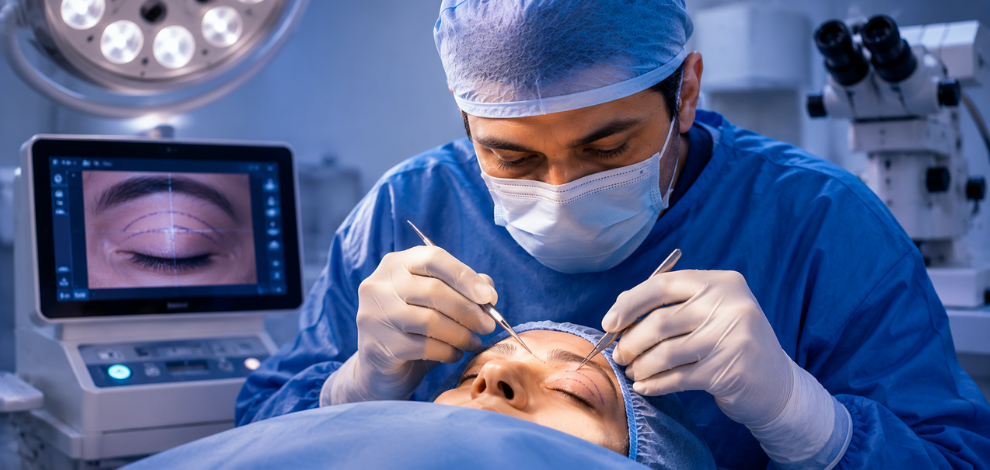
The Surgical Procedure Performed under appropriate anesthesia, ptosis surgery involves carefully adjusting the eyelid-lifting mechanism to achieve a more natural, symmetrical eyelid position, while also addressing any functional visual obstruction present. Dr. Singh's surgical experience allows for careful, precise adjustment, aiming to balance both eyelids as closely as possible for a natural overall appearance.
Recovery After Ptosis Surgery Following surgery, mild swelling, bruising, or discomfort around the eyelid is common and typically improves over the following days to weeks. Follow-up visits allow Dr. Singh to monitor healing progress and assess the final eyelid position, ensuring optimal functional and cosmetic outcomes as recovery continues.
Congenital Ptosis in Children When ptosis is present from birth, careful monitoring and timely evaluation are particularly important, as significant congenital ptosis can interfere with normal visual development if the drooping eyelid obstructs the visual axis during critical early developmental years. Dr. Singh's pediatric ptosis evaluation focuses on determining whether and when surgical intervention may be necessary to support healthy visual development.
Age-Related Ptosis in Adults For adults experiencing gradual eyelid drooping due to age-related muscle weakening, surgery can help restore a more alert, refreshed appearance while also addressing any functional visual field impact that may have developed as the condition progressed over time.
Why Choose Our Clinic for Ptosis Treatment Dr. Singh's surgical background in ophthalmology supports careful, individualized ptosis evaluation and surgical planning, ensuring that treatment addresses both the underlying cause and the specific functional and cosmetic needs of each patient.
Taking the Next Step If you or your child are experiencing drooping of the upper eyelid, whether affecting vision or causing cosmetic concern, scheduling a thorough ptosis evaluation with Dr. Mahendra Singh can help determine the most appropriate treatment path.