
Eye
August 21, 2026
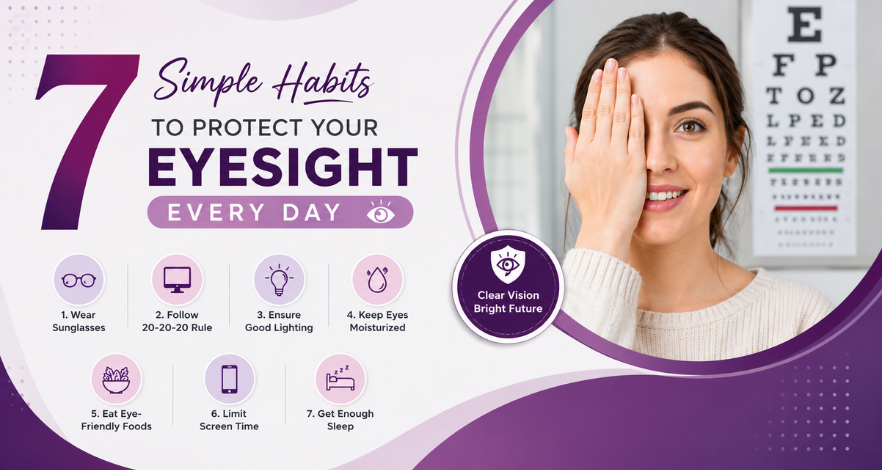
7 Simple Habits to Protect Your Eyesight Every Day
Eyesight is one of the most valuable senses we have, yet it is often overlooked until problems begin to affect daily life. The encouraging news is that many common eye issues, from digital eye strain to age-related decline, can be significantly reduced through consistent, simple daily habits. In this article, we break down seven practical steps that support long-term eye health for people of all ages.
1. Follow the 20-20-20 Rule for Screen Time With most people spending several hours a day on digital devices, eye strain has become increasingly common. The 20-20-20 rule offers a simple solution: every twenty minutes, look at something twenty feet away for at least twenty seconds. This brief break allows your eye muscles to relax and reduces the fatigue associated with prolonged close-up focus, particularly during work or study sessions involving screens.
2. Maintain Proper Lighting While Reading or Working Poor lighting forces your eyes to work harder, contributing to strain and fatigue over time. Whether reading a book or working on a computer, ensure your environment has adequate, evenly distributed lighting. Avoid working in very dim rooms with a bright screen, as the contrast can be particularly tiring for your eyes over extended periods.
3. Wear Sunglasses with Proper UV Protection Prolonged exposure to ultraviolet rays can contribute to long-term eye damage, including an increased risk of cataracts and other age-related conditions. Whenever you are outdoors, especially during peak sunlight hours, wearing sunglasses that offer proper UV protection helps shield your eyes from harmful rays while also reducing glare and improving visual comfort.
4. Eat a Diet Rich in Eye-Supporting Nutrients Nutrition plays a meaningful role in maintaining healthy eyes. Foods rich in vitamins A, C, and E, along with omega-3 fatty acids and antioxidants like lutein and zeaxanthin, support retinal health and may help reduce the risk of age-related macular degeneration. Incorporating leafy greens, colorful vegetables, fish, and nuts into your diet can contribute meaningfully to long-term eye health.
5. Stay Hydrated to Prevent Dry Eyes Dehydration can contribute to dry, irritated eyes, particularly for individuals who spend long hours in air-conditioned environments or in front of screens. Drinking adequate water throughout the day supports tear production and overall eye comfort, helping to reduce symptoms of dryness and irritation.
6. Avoid Rubbing Your Eyes Excessively While it may feel like a natural response to itchiness or fatigue, rubbing your eyes frequently can irritate the delicate tissue and, in some cases, increase the risk of infection or damage to the cornea. If your eyes feel itchy or irritated, using clean lubricating drops or gently rinsing with water is generally a safer alternative.
7. Schedule Regular Comprehensive Eye Examinations Perhaps the most important habit of all is committing to routine eye checkups, even in the absence of noticeable symptoms. Many eye conditions, including glaucoma and early-stage cataracts, develop gradually without obvious warning signs. Regular examinations allow eye specialists to detect potential issues early, when treatment is often simpler and more effective.
Building These Habits into Daily Life Incorporating these habits doesn't require a complete lifestyle overhaul. Small, consistent changes, such as setting screen break reminders, keeping sunglasses within reach, and scheduling an annual eye exam, can collectively make a meaningful difference in protecting your vision over the years. As with most aspects of health, prevention is often more effective and less costly than treating advanced conditions after they develop.
When to See a Specialist If you experience persistent symptoms such as blurred vision, frequent headaches, excessive tearing, or noticeable changes in your eyesight, it is important to consult an eye specialist promptly rather than waiting for symptoms to worsen. Early diagnosis often leads to simpler, more effective treatment options.
At VisionCare Eye & Dental Clinic, our specialists are always available to guide you through personalized eye care recommendations based on your lifestyle, age, and specific vision needs. Protecting your eyesight is a long-term commitment, and small daily habits, combined with regular professional checkups, form the foundation of lasting eye health.